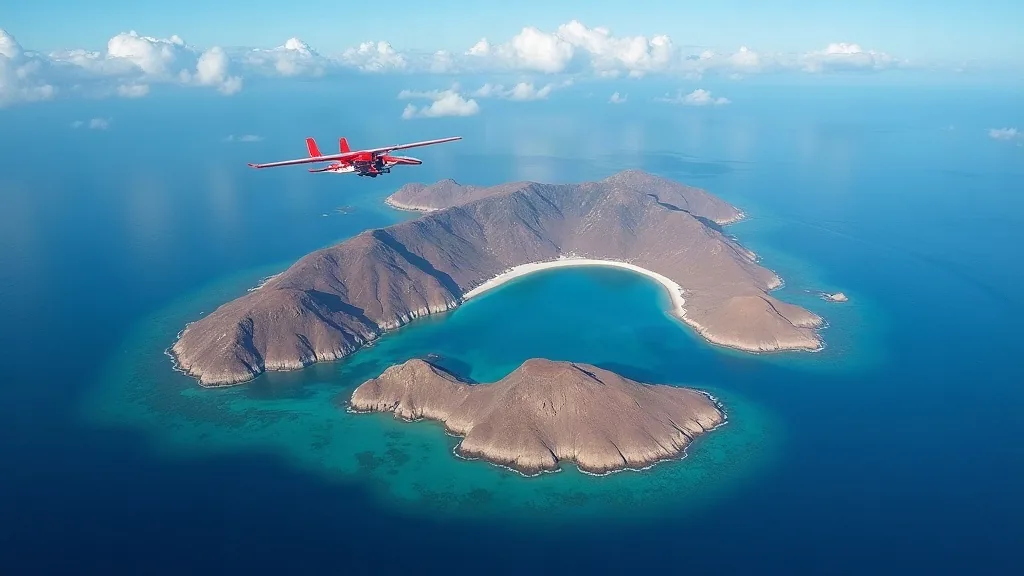
Bali to Komodo Relay Seaplane Charter
A Bali to Komodo relay seaplane charter is not a direct hop. It is one aircraft flying one or two technical stops — typically through Lombok or Sumbawa waters — before reaching Labuan Bajo or a Komodo National Park water-landing point, daylight-only, priced as a full-aircraft charter. Each leg is checked for feasibility separately, because no public Bali–Komodo seaplane route is currently published. Juara Holding Group is an independent coordination desk, arranging the relay with licensed amphibious operators.
What Does “Relay” Actually Mean Here?
Bali sits roughly 450–500 km west of the Komodo waters near Labuan Bajo — too far for most amphibious charter aircraft to cover on a single fuel load, especially with a full passenger and luggage payload. A relay charter breaks that distance into legs, each one a separately confirmed hop with its own water-landing site, fuel plan and weather window.
This is different from a scenic flight or a fixed-route transfer. There is no timetable to book against. The desk builds a leg-by-leg plan against what an operator can actually fly that week, then prices the whole relay as one chartered aircraft.
As of September 2026, the only Indonesian amphibious operator with a published Bali-adjacent charter route is Santai Seaplane (PT Santai Seaplane Aviation), whose South Bali – Sumbawa charter page states flights operate under its Indonesian partner’s Air Operator Certificate, PT Wisarada Sapanta Utama, AOC 135-067, approved by the Ministry of Transport and DGCA Indonesia. That page does not extend to Komodo. Bali–Gili, Bali–Lombok, Bali–Nusa Lembongan, Bali–Sumba and Bali–Komodo water landings all remain feasibility-on-request routes — not published products — as of this writing.
How Many Stops Does the Relay Need?
Most Bali–Komodo relay plans run on either a one-stop or two-stop structure, depending on aircraft range, payload and which water-landing sites are cleared for use that week. The table below is a desk-estimate framework, not a confirmed schedule — actual stop count and timing are set once an operator reviews your dates.
| Leg | Typical Stop Point | Purpose | Desk-Estimated Block Time* |
|---|---|---|---|
| Leg 1 | Bali (southern water-landing site) → Lombok or Sumbawa waters | Fuel positioning, weight/payload check, short passenger break | ~45–60 min |
| Leg 2 | Lombok/Sumbawa → Labuan Bajo or Komodo National Park water-landing point | Weather-hold buffer, park-permit check-in, vessel rendezvous confirmation | ~50–75 min |
| Optional Leg 3 | Repositioning stop (weather diversion or return relay) | Only added if leg 2 cannot be flown same-day | Not estimable in advance |
*Estimates are desk planning figures only, built from public aircraft performance patterns and water-aerodrome siting under the Manual of Standard CASR Part 139 Volume III (SKEP/227/VIII/2010; KP 206/2021). They are not operator-confirmed until your specific date, aircraft and payload are checked.
Every water-landing site used on the relay has to be a certified and registered water aerodrome under CASR 139.101, coordinated with AirNav Indonesia and the relevant maritime unit. That certification requirement — not distance alone — is often what decides whether a stop point is usable on a given week.
What Does the Desk Need to Price Your Relay?
Because there is no published Bali–Komodo fare, pricing is built per request against the full-aircraft model: you charter the whole seaplane, not a per-seat ticket, and the price reflects positioning legs, stops, landing/handling fees at each water aerodrome, and any weather-driven repositioning. Send the details below and the desk returns a leg-by-leg plan with pricing.
| Information Needed | Why It Matters |
|---|---|
| Passenger count and approximate total weight | Determines aircraft type and whether a stop is needed for weight balance |
| Luggage, kg per person | Affects payload and may change the stop plan |
| Vessel position (yacht/phinisi GPS or marina, if relevant) | Sets the rendezvous point for the final leg |
| Komodo National Park landing intent | Park-area water landings sit inside coordinated aerodrome zones and require permit checks before confirmation |
| Preferred date and backup date | Daylight-only operations mean weather flexibility changes feasibility |
| One-way or return relay | Changes total block time and pricing structure |
Quote on request is not a placeholder — it reflects that no verifiable IDR or USD seaplane charter fares exist in the public record for this route as of 2026. Any number given before an operator reviews your date and payload would be invented, and the desk will not do that.
How Does Booking a Relay Charter Work?
- Send your trip brief. Pax count, luggage weight, vessel position (if applicable), and travel dates go to the desk via WhatsApp or email.
- The desk checks feasibility per leg. This means confirming aircraft availability, water-aerodrome clearance at each stop, and Komodo National Park permit requirements where landings are planned.
- You receive a leg-by-leg plan with full-aircraft pricing. This includes stop count, purpose of each stop, and the pricing basis — never a guessed fare.
- Confirm and pay the operator deposit. Terms are set by the licensed operator, not by the desk, and are disclosed before you commit.
- Day-of coordination. The desk stays in contact through departure, technical stops and the final Komodo-area rendezvous, but final go/no-go authority on each leg sits with the operator’s pilot-in-command.
No stage in this process promises a fixed departure time. Seaplane operations under CASR Part 135 (charter) or Part 91 are daylight-only and weather-, tide- and sea-state-dependent by regulation, not by choice.
What If Weather Closes One Leg?
Weather can close a single leg without cancelling the whole relay — or it can force a full reschedule, depending on which stop is affected and how much runway remains in your travel dates.
- If the first leg is delayed, the whole relay typically slides to the next viable weather window; the desk holds the vessel-rendezvous leg for reconfirmation rather than flying into an unconfirmed stop.
- If the Komodo-area leg is closed but earlier legs already flew, standard practice is to hold at the last confirmed stop until conditions clear, or reroute the final approach by boat with the operator’s coordination — this is arranged case by case, never guaranteed in advance.
- Sea-state at the water landing site matters as much as sky conditions. Amphibious handling facilities are designed around tight surface-elevation tolerances, so a rough sea state can close a landing site even under clear skies.
Every seaplane on the relay carries standard water-operation safety equipment — life jackets per person, sound-signal equipment, anchor and sea anchor — as required under CASR Part 91 Amendment 5. That equipment exists because weather holds are a normal part of this kind of flying, not an exception.
Build Your Relay
Juara Holding Group is an independent broker and coordination desk, established 2015, arranging seaplane relay charters with licensed Indonesian amphibious operators. Juara Holding Group does not own or operate the aircraft, and is not affiliated with Santai Seaplane, PT Wisarada Sapanta Utama, or any other named operator — the desk checks feasibility and coordinates on your behalf.
Send your pax count, luggage weight and (if relevant) vessel position to start a feasibility check. There is no fixed fare to quote until an operator reviews your date.
WhatsApp 6281139414563 · bd@juaraholding.com — “Build my relay”
Frequently Asked Questions
Is there a direct Bali to Komodo seaplane route in 2026?
No. As of September 2026, no operator has published a direct Bali–Komodo seaplane water-landing route. The only published Bali-adjacent charter page, from Santai Seaplane, covers South Bali to Sumbawa under AOC 135-067. A Bali–Komodo trip is arranged as a relay with technical stops, checked for feasibility per date rather than booked against a fixed schedule.
How many technical stops does a Bali–Komodo relay charter need?
Most plans use one or two stops, commonly through Lombok or Sumbawa waters, depending on aircraft range and payload. The desk builds the exact stop count once your passenger weight, luggage and preferred date are known — it is not fixed in advance, and desk block-time figures are estimates until an operator confirms them.
Can the seaplane land directly next to my yacht or phinisi in Komodo waters?
A landing near a vessel is possible in principle but must sit inside a coordinated, certified water-aerodrome zone under CASR 139.101, and any landing inside Komodo National Park is subject to park entry-permit rules checked before confirmation. Send your vessel’s GPS position or marina and the desk will confirm whether a rendezvous point there is feasible.
What happens if weather closes the Komodo leg on the day of the charter?
The relay holds at the last confirmed stop until conditions clear, or the desk arranges a reroute in coordination with the operator — daylight-only, weather-, tide- and sea-state-dependent operation means this is planned for, not treated as a failure. No departure or arrival time is guaranteed on any leg of the relay.
How is a Bali–Komodo relay charter priced if there’s no published fare?
Pricing is quote on request, built around the full-aircraft charter model: positioning legs, stop count, landing and handling fees at each water aerodrome, and possible weather repositioning. No verifiable IDR or USD seaplane fare for this route exists publicly as of 2026, so the desk prices each request individually once pax, luggage and dates are confirmed.